
Herculaneum, An Archaeology Wonder, 2025

About 2,000 years ago, in 79 AD, Mount Vesuvius (near Naples) had a huge eruption, over 100,000 times stronger than the atom bombs dropped on Japan.
Several communities were destroyed including Pompei and Herculaneum. Because we enjoyed our day so much in Pompeii in 2011, we decided to visit today.
Herculaneum was covered with 50 to 60 feet of lava and mud which preserved the town for centuries, although making excavation very difficult. However, it did preserve the city from tampering and looting.
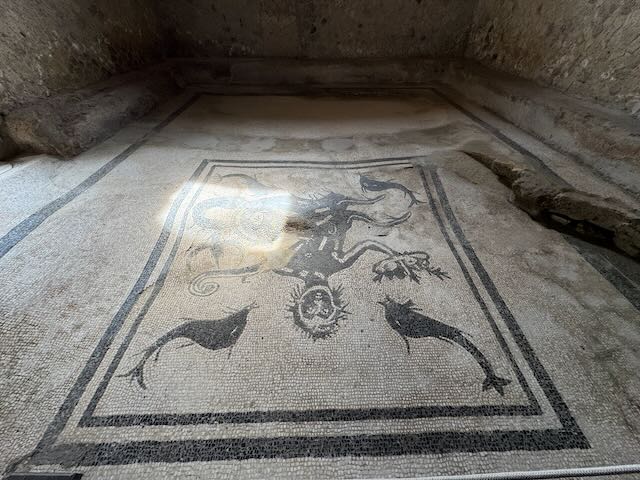

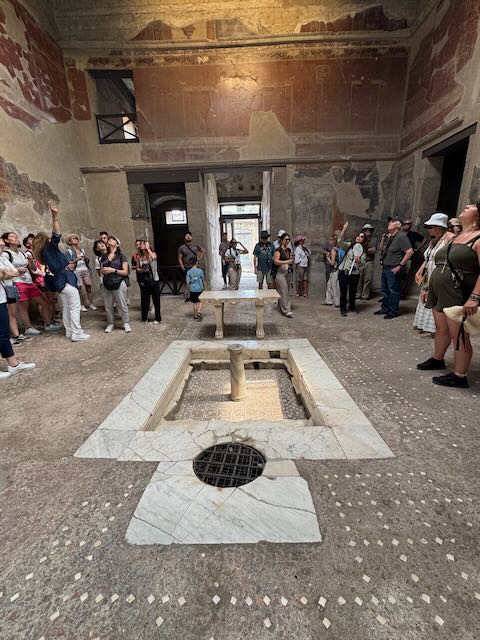
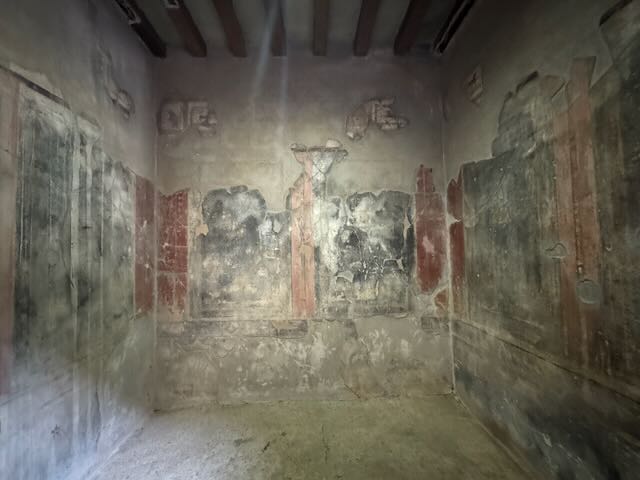
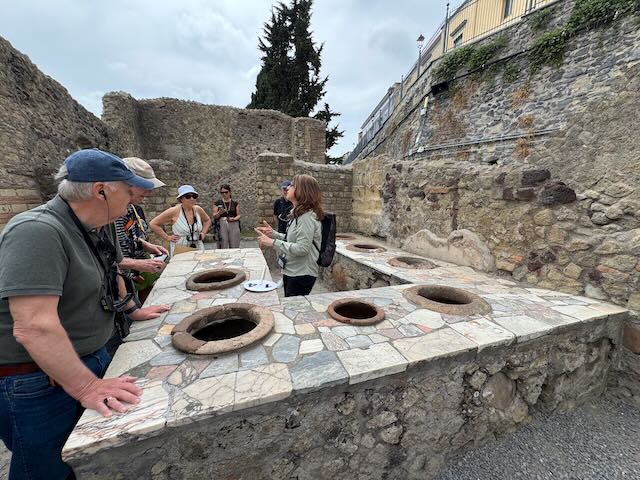
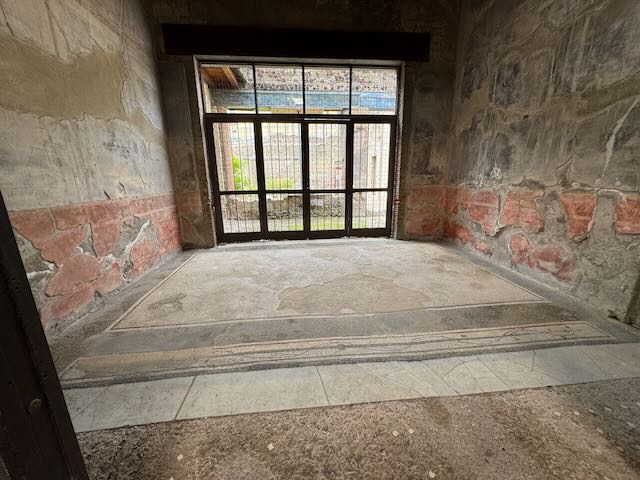
The special conditions of ground humidity made possible the conservation of wooden frameworks of houses, wooden furniture, the hull of a sizable boat, pieces of cloth, and food (carbonized loaves of bread left within ovens).
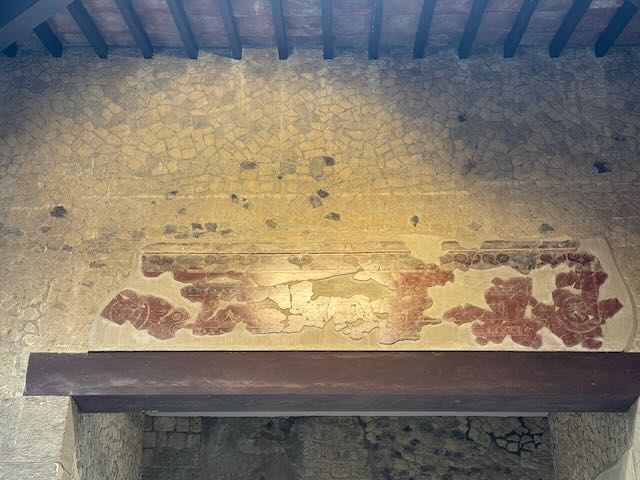

Our visit offered details of private life in the ancient world. Herculaneum was a wealthy and popular seaside retreat for the Roman elite.
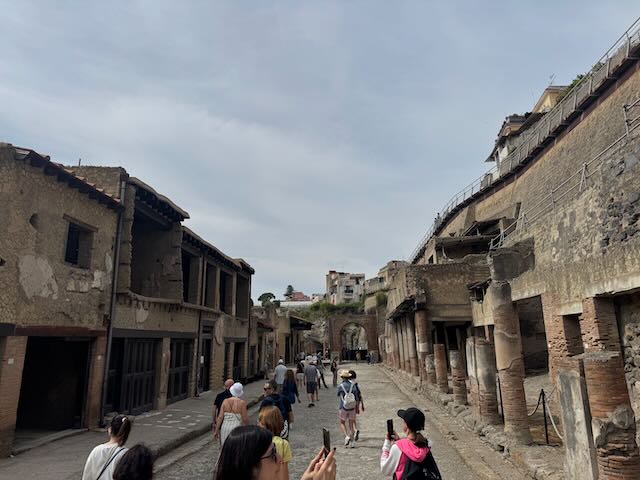
It withstood the natural disaster better than Pompeii since many of its upper floors are still intact and show amazing detail of design and décor. Detailed features in wood and marble, decorations, jewelry, and even organic remains like food can be seen.
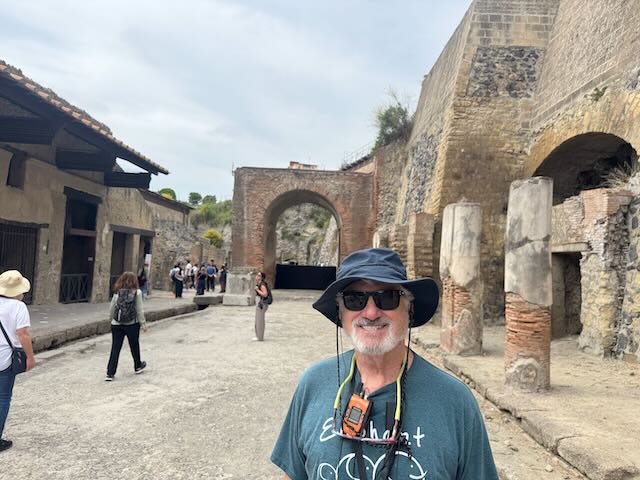


The Herculaneum streets show the detailed Roman planning.
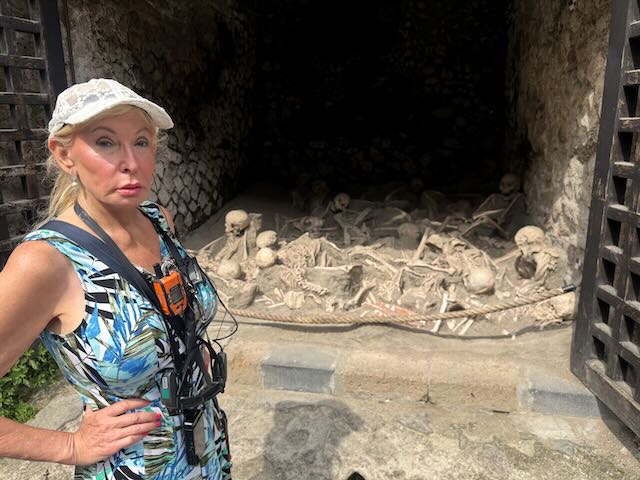
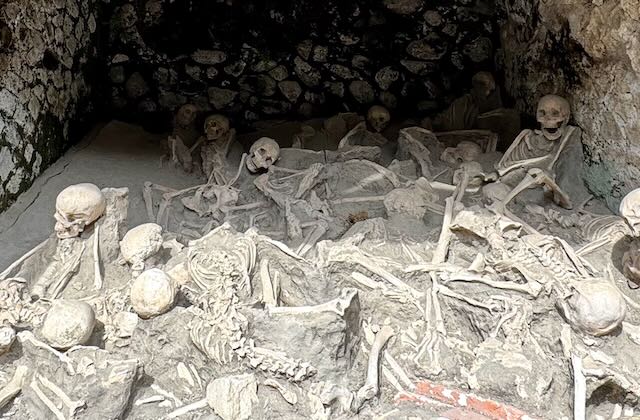
In 1980, 300 human skeletons were unearthed here in the port warehouses. Residents were attempting to flee the eruption in 79 AD. Their bodies were exposed to temperatures exceeding 800 degrees which instantly vaporized them and left their skeletons exactly where they fell.