
Paracas National Reserve, Peru 2025
Today we docked near Pisco on the southern coast of Peru. We toured the Paracas National Reserve, known as the Peruvian Galapagos, located in the Ballestas Islands.
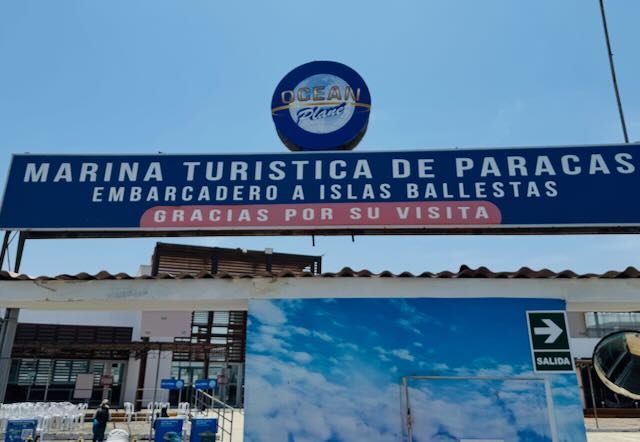
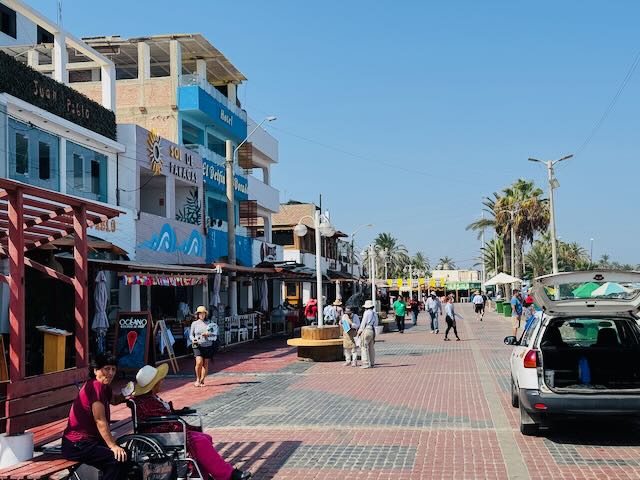


These islands are accessible by tour boats from nearby Paracas, a cute resort town.


On the way there we passed our ship. It is the one in the back.

The first sight was the famous El Candelabro de Paracas, a huge geoglyph about 1,700 feet long and 4 feet deep.
It is believed to be about 2500 years old and related to the lines and geoglyph of Nazca, and like these its origin is unknown. Its main characteristic is that over the years this image has remained impervious, because the strong winds of the Paracas peninsula fill and empty the lines of the sand, which means that they are always well marked.
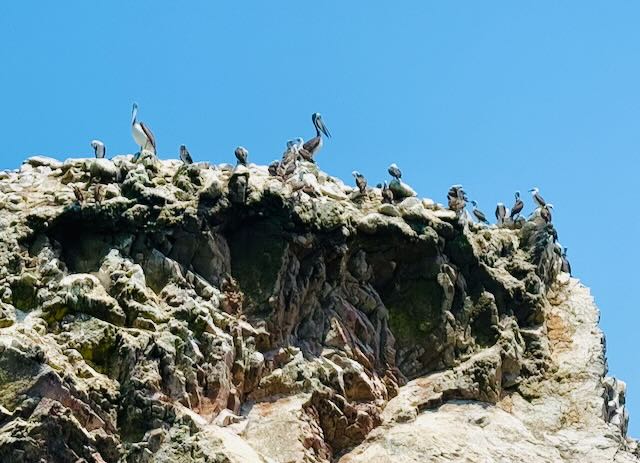


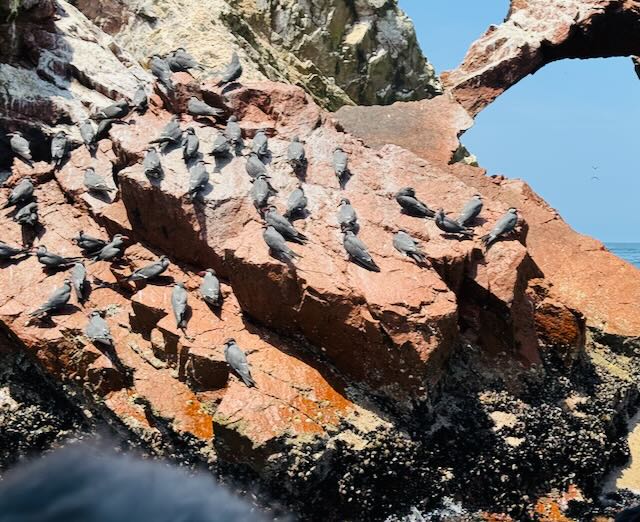
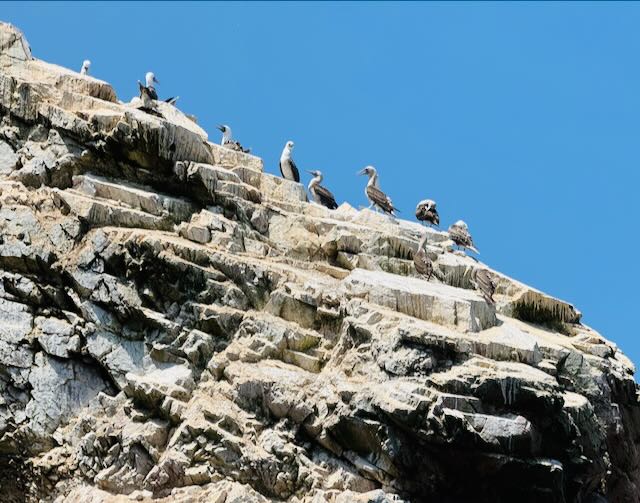

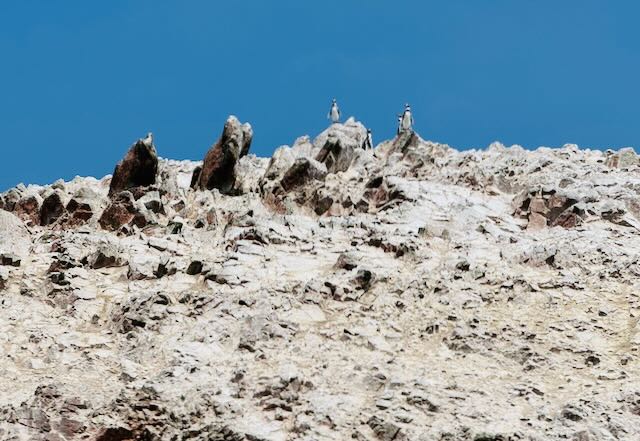

Birds were everywhere. We saw penguins, cormorants, pelicans, birds, vultures and seagulls.
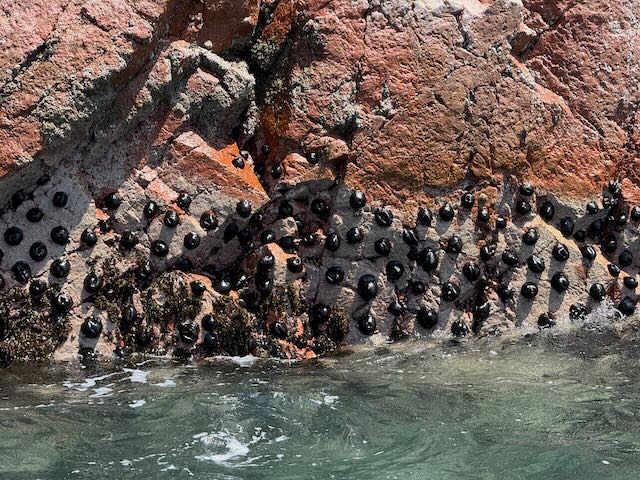
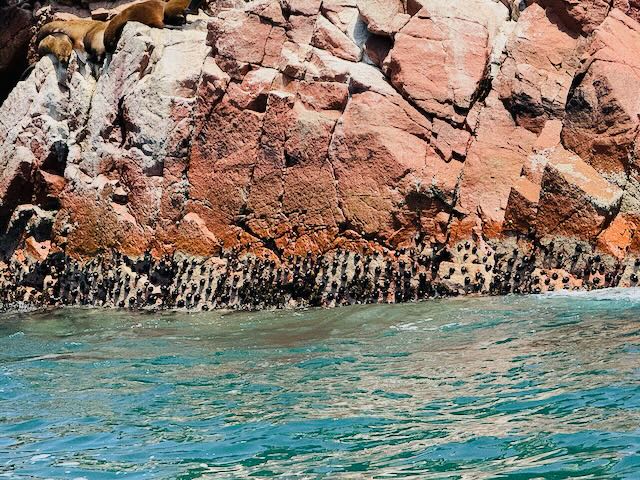
Lower on the rocks were crabs, starfish and sea anemones.


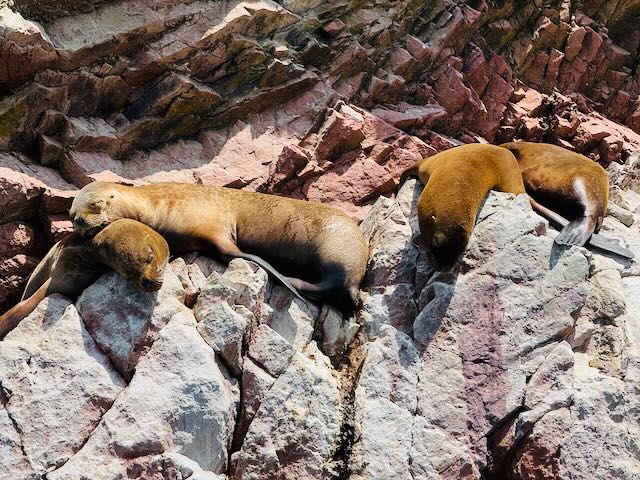
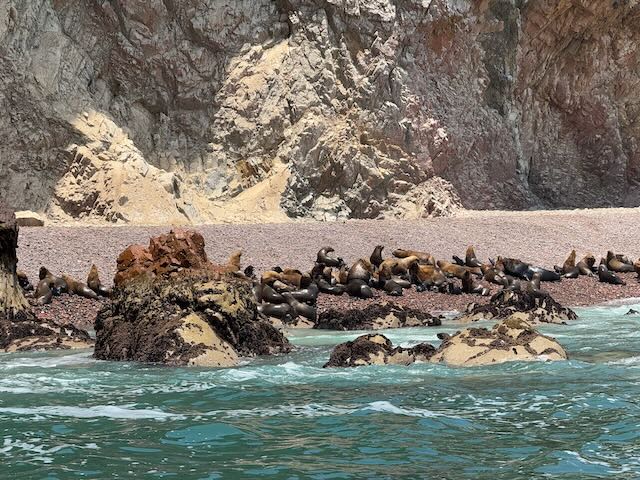
The sea lions and seals were a special treat.
To me, the most amazing sights were the rock formations though.
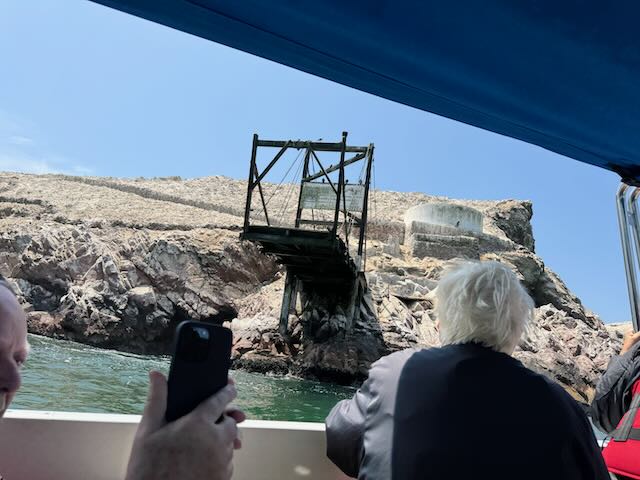
Since time immemorial, seabirds have deposited their guano here. And since the time of the Incas, this guano has been used as a fertilizer. From the mid-1800s to the early 1900s, guano became a valuable global commodity and mined extensively on Peruvian islands. It was as deep as 230 feet.
By the mid-1900s, the wide availability of synthetic fertilizers diminished its importance.